
Start with the app’s owner, not the ball animation
Plinko is a recognisable game idea. The name can appear on a provider’s casino game, a casual mobile game, an advert, a simulator or an unrelated reward app. The bouncing ball does not tell you which business holds an account. A screenshot containing the word Plinko is therefore a weak identifier: begin with the app-store publisher, the legal entity in its terms and the exact website domain.
Write those three identifiers down before reading reviews. If the listing says one publisher while the privacy page names a different company, find an explanation. A developer can legitimately publish for another business, but that relationship should be understandable. A missing explanation is a reason to stop the check, not proof of a particular offence. Do not guess an identity from a similar logo or a familiar colour scheme.
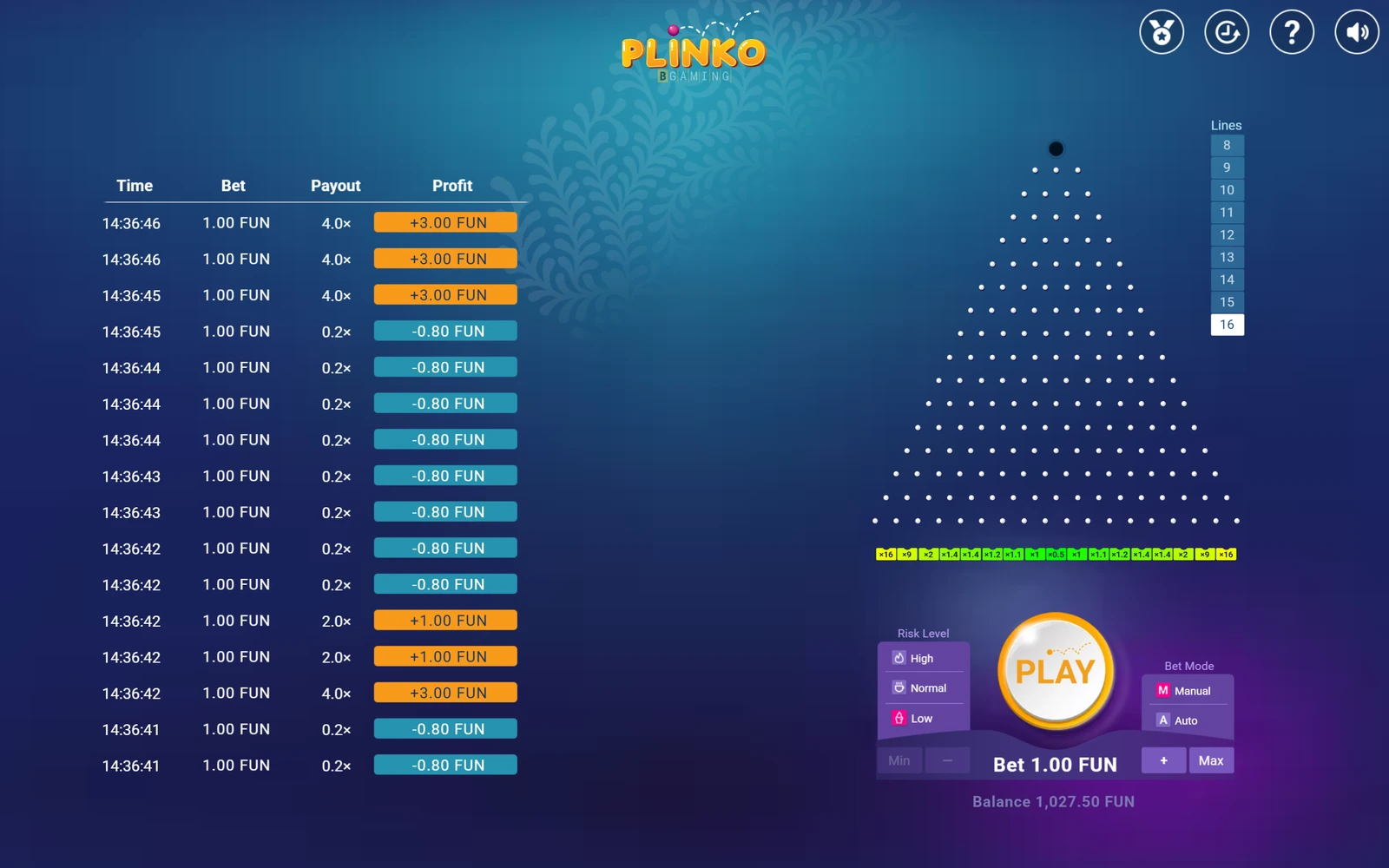
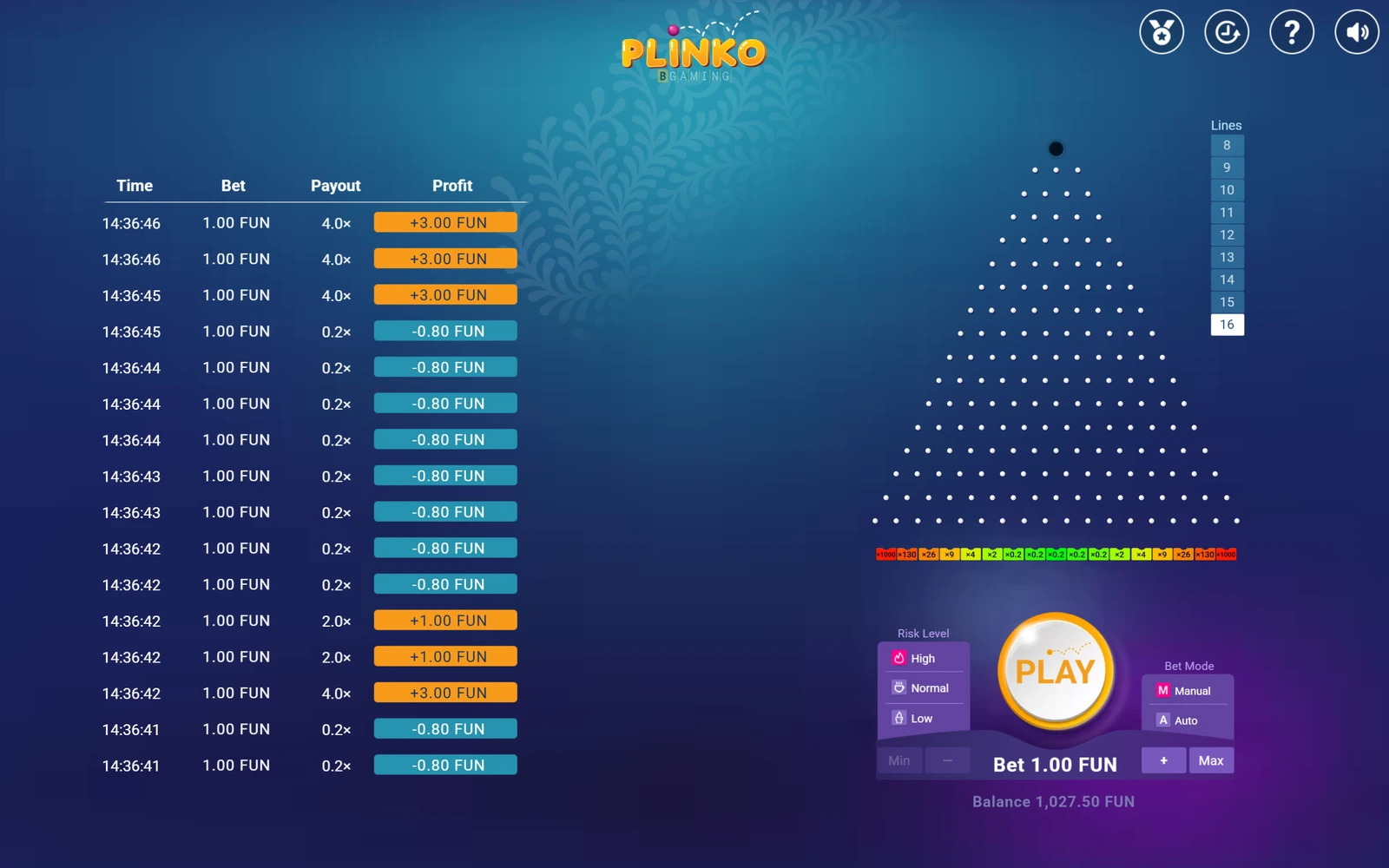
The original game used in this guide is BGaming Plinko. Our figures describe that public FUN demo and the exact payout table captured for it. They do not audit a mobile publisher’s payments. Even an app that embeds the same game could have different account terms, so recognising the game is only the first half of recognising the service. Use the version identifier when the provider name is unclear.
A displayed balance is not always withdrawable money
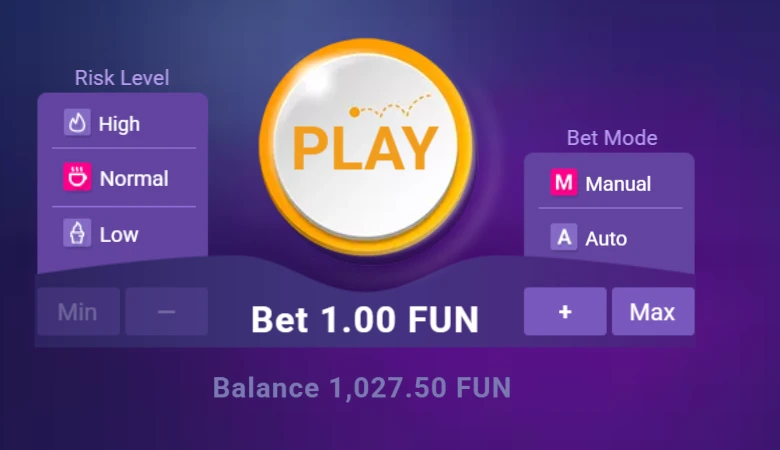
A balance needs a unit and a status. FUN is a virtual practice unit; it has no cash value in our demo. Coins or diamonds may be points in a casual app. A euro symbol can mean a cash balance, a bonus balance, a prize illustration or a conversion estimate. Read the label and the conditions. Moving the decimal point on a screen cannot establish a right to a payment.
Consider a hypothetical app showing €120: €20 deposited and €100 credited as a restricted bonus. It would be wrong to describe the whole €120 as freely withdrawable without reading the bonus rules. A condition such as 20× turnover on the €100 bonus would mean €2,000 in counted stakes, not a €2,000 deposit. Which bets count, deadlines and any cash-out ceiling would still matter. These numbers illustrate how to read a condition; they are not an offer from an app we tested.
For any money amount, ask four separate questions: where did it come from, can it be used for a stake, can it be requested for withdrawal, and has it actually arrived? An app can answer yes to one and no to another. Keep those stages separate in screenshots or notes. If a claim says “won €500” but only shows an internal animation, you still have no evidence of the last two stages.
Two balances that can look identical
Imagine two screenshots both showing 150. In the first, the unit is FUN and there is no withdrawal function. In the second, an app labels the figure as euros but says the amount becomes eligible only after another condition. The first is clearly a practice balance; the second is an unverified payment claim. Neither becomes a bank receipt because the digits match. Before comparing screenshots, include the unit, account status and the page that defines the amount.
Now suppose the second app requests a further €10. That request does not automatically establish fraud, but it is not explained by the mathematics of a Plinko payout. A payout calculation multiplies a stake by a multiplier; it does not require a new transfer to prove that the calculation happened. Find the written contractual basis and independently confirmed support channel before making any additional payment. Do not treat money already spent as a reason to accept a new unexplained condition.
What an advert and a withdrawal screenshot leave out
Italian discussions about Plinko adverts raise a practical question: does an instant bank notification prove that the game paid? A short clip rarely supplies the full chain. It may not show the account owner, starting deposit, bonus conditions, pending status or whether the notification belongs to that session. Editing can remove the wait between events. We use these questions as checks; the comments themselves do not verify that a named product paid or failed to pay.
A useful case would distinguish the date of the request, the amount requested, the processing status and the date of receipt. It would state whether documents were requested and whether the amount came from deposited funds or a promotion. Personal account numbers should be redacted. Even a complete individual case is evidence about that transaction, not a guarantee that every future customer will receive the same service.
Be cautious about a story that becomes less specific as the claimed profit grows. “I earned €1,000 in minutes” gives fewer useful details than a modest, documented sequence of deposit, play and withdrawal. Nor does a comment count establish reliability: repeated wording, affiliate incentives and an audience selected by an advert can distort what you see. Read the strongest criticism and the strongest favourable account with the same questions.
A favourable RTP does not verify withdrawals
A theoretical RTP concerns the game’s outcome distribution. It does not tell you who owns an app, whether its advertised balance can be withdrawn or whether a payment request was processed. Even a perfectly calculated 99% average cannot answer those account questions. Conversely, a losing sequence does not by itself prove that the app manipulated the game. Separate a mathematical claim from a business-service claim and look for evidence appropriate to each one.
A practical review can therefore give two different answers: the displayed table matches a known game, while the payment claim remains unverified. There is no need to force both into a single yes-or-no verdict. This is especially useful when a video borrows recognisable provider artwork but directs the viewer somewhere else. The game can be identifiable while the account behind the destination is still unclear.
Checks for an Italian money account
For a real-money remote gambling service aimed at Italy, identify the exact operator and consult the current official ADM information. A provider logo is not an operator authorisation. A domain similar to an authorised one is not the same domain. This guide has not verified an Italian operator account or a destination available through a partner route, so our demo results cannot stand in for that check.
Keep the website, store listing and terms aligned. Check whether the listed contact belongs to the same service and whether the terms describe account verification and payment handling in understandable language. Do not send identity documents to an address supplied only in a comment or private message. A genuine verification request should be traceable through the authenticated service you meant to use.
If money is already involved and a withdrawal is unclear, collect your own timeline before drawing conclusions. Record the request reference, dates, written requirements and replies. Use the service’s documented complaint channel; payment-provider or official consumer guidance may be relevant to the particular problem. We cannot access accounts or reverse transactions. Do not publish identity documents or complete payment details in a public discussion.
APK downloads and “unlock your winnings” requests
Installing an APK is a separate decision from playing a browser demo. A file circulated through a chat may not have a verifiable publisher or update channel. Our free demo runs in the browser and does not need an APK. If an advert redirects through several unrelated domains before asking for an installation, record the final publisher rather than assuming it is BGaming because the first screen showed Plinko.
A predictor app adds another claim: that it can know or improve the next result. To evaluate that, require a rule fixed before unseen outcomes, a record of all attempts and a comparison at the same stake exposure. A sequence of selected winning screenshots does not meet that standard. The predictor guide shows what probability estimates and historical pattern tests can actually tell you.
An unexpected demand for another payment to unlock a displayed prize deserves independent verification before any transfer. Do not rely on the urgency or apparent size of the balance. Return to the original terms and independently confirmed contact channel. Likewise, a request for a remote-access app, wallet recovery phrase or banking password is unrelated to learning Plinko and should not be fulfilled as part of a game test.
A short decision sheet you can actually use
Take a blank note and make three headings: identity, money and evidence. Under identity put the publisher, exact domain and game provider. Under money put the unit, deposited amount, bonus restrictions and withdrawal conditions. Under evidence put what you personally observed and what is merely claimed in an advert or comment. An empty field is an unanswered question, not an invitation to fill it with a favourable assumption.
If your immediate goal is understanding the ball and multiplier, you do not need to resolve an app’s commercial claims at all. Open the FUN demo, record ten ordinary drops and calculate returned credits minus stakes. If your goal is comparing staking systems, use the simulator without a deposit. Neither exercise tests withdrawals, but both let you answer the game question without pretending that a payment claim has been verified.
What “Plinko is a scam” does and does not answer
A useful answer must name the particular product and the conduct being questioned. Was a casual game advertised as withdrawable cash? Did a different app open after the advert? Did a user misunderstand a bonus restriction? Did a documented withdrawal remain unpaid? These are different problems. A broad label can obscure the very detail needed to investigate. Keep an exact link or publisher name privately in your notes, without sharing account credentials or personal payment data.
Common questions
Does every Plinko app use the same game?
No. Check the provider, publisher and payout table separately. The name and ball animation do not identify an account or a withdrawal service.
Can I withdraw the FUN balance shown in this demo?
No. It is a virtual balance with no cash value. Our recorded returns and simulator results are not bank payments.